
The 5 Best Breathwork Techniques for Parents That Reset Your Nervous System in 60 Seconds
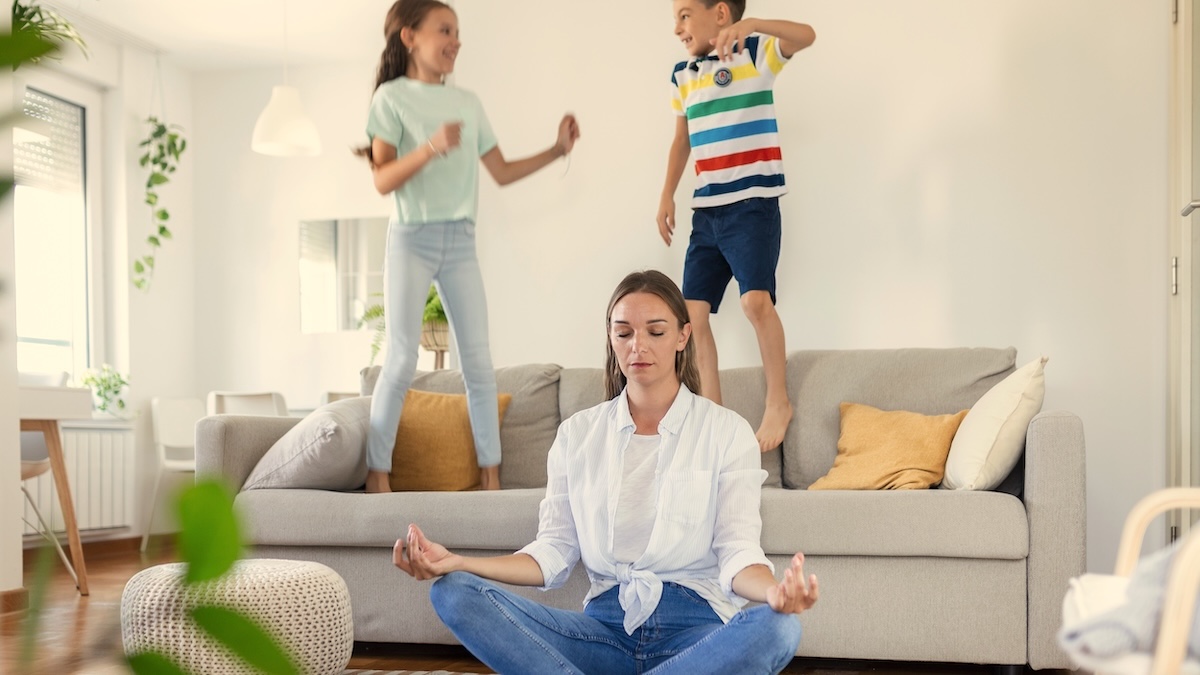
You feel it building. Your toddler is asking for the same snack for the fifth time. Your baby is crying in the other room. You haven't sat down since 9am.
And somewhere in your chest, the wave is rising—that hot, tight pressure that's about to come out of your mouth as something you don't actually mean.
Before you walk into the next room. Before you say the thing you'll regret.
Slow your exhale to a count of six.
That's breathwork. And it might be the single most underrated parenting tool you've never been formally taught.
Why Breathwork is Vital for Parents
Most parenting advice asks you to add something to your day. Read this book. Try this routine. Sign up for this course.
The problem? You don't have time. You have a child climbing your leg right now.
Breathwork works because it is already with you. Your breath is the only function in your body that runs both automatically and on command.
This means it is the one direct lever you have over your nervous system, in any moment, with no equipment, no privacy, and no warning required.
The science is well established. Slowing the breath activates the vagus nerve and shifts your nervous system out of fight-or-flight and into the parasympathetic state where calm, patience, and clear thinking become biologically possible again.
This is not a mood thing. It is a wiring thing. You cannot think your way to calm. You can breathe your way there in under a minute.
For overwhelmed parents, that's everything.
An Ancient Amplifier
There is one addition to breathwork that takes it from useful to remarkable, and almost no modern parenting resource talks about it.
A mudra is a hand position used in yogic and meditative traditions to direct attention and shift internal state.
The word comes from Sanskrit and roughly translates as seal or gesture. For thousands of years, people have paired specific finger positions with specific breath techniques to deepen their effect.
Modern science is beginning to explain why this pairing works.
Each fingertip contains thousands of nerve endings. Pressing them together activates proprioceptive feedback that sends a signal of focused attention to the brain.
Combined with intentional breathing, mudras turn breathwork into a kind of biofeedback shortcut. Your hands become a physical anchor that holds your mind in place while the breath does its work.
You don't need them to do breathwork. But once you know them, you'll feel the difference.
5 Breathwork Techniques for Parents
Below are five breathwork techniques every parent should know, each paired with the mudra that amplifies it.
1. For Grounding: Slow Nasal Breath (with Gyan Mudra)
The breath: Inhale slowly through your nose for a count of four. Exhale slowly through your nose for a count of six.
The longer exhale is what activates your parasympathetic nervous system—the rest and digest branch that turns down the panic.
The mudra: Touch the tip of your thumb to the tip of your index finger. The other three fingers stay extended and soft.
This is Gyan mudra, the most well-known hand position in the world, the one in every yoga photo ever taken.
When to use it: When your mind is racing. When you can feel your shoulders climbing toward your ears. When the noise of the house is too much.
This combination is the fastest way back into your body. Use it in school pickup line. While waiting for the bath to fill. Use it before you open the bedroom door.
2. For Patience: Box Breath (with Shuni Mudra)
The breath: Inhale four. Hold four. Exhale four. Hold four. Repeat for four rounds. This is the breath Navy SEALs use under fire, because it works.
The mudra: Touch the tip of your thumb to the tip of your middle finger. This is Shuni — the patience mudra.
When to use it: The fifth time they ask "why." The third time they spill the same drink. The moment you realize bedtime is going to take ninety minutes again.
Together, the breath and the gesture create a small, contained space inside you where reaction has nowhere to land.
Patience is not a personality trait. It is a nervous system state. This is how you build it on demand.
3. For Connection: Warming Breath (with Surya Mudra)
The breath: Inhale fully through your nose. Exhale through your mouth with a soft haaa sound, like fogging a mirror. Three rounds.
The mudra: Touch the tip of your thumb to the tip of your ring finger. This is Surya, associated with warmth and vitality.
When to use it: When you feel disconnected from your child after a hard day. When you're going through the motions of bedtime but your heart isn't in it. Before you walk into their room to apologize.
The warming breath gently re-engages your social engagement system. This is the part of you that wants to make eye contact, soften your face, reach out a hand.
Most parents do not need to try harder in moments of disconnection. They need to come back into their body, and let warmth do what warmth naturally does.
4. For Clarity: Alternate Nostril Breath (with Buddhi Mudra)
The breath: Use one hand. Close your right nostril with your thumb. Inhale through the left. Close the left with your ring finger. Exhale through the right. Inhale through the right. Switch. Exhale through the left. That's one round. Do four.
The mudra: With your free hand, touch the tip of your thumb to the tip of your pinky finger. This is Buddhi, the mudra of communication and clarity.
When to use it: Before a hard conversation with your partner about parenting. Before responding to a passive-aggressive text from a family member. When your head is foggy and you can't tell if you're being reasonable.
Alternate nostril breathing is one of the most studied breath practices in modern stress research, with consistent findings around lowered cortisol and improved cognitive clarity. Together with Buddhi, it's a reset button for the moments when you need to think before you respond.
5. For Steadiness: Belly Breath (with Anjali Mudra)
The breath: One hand on your heart, one on your belly. Inhale into your belly so the lower hand rises. Exhale slowly so it falls. Five rounds.
The mudra: Bring both palms together at the centre of your chest, thumbs lightly touching your sternum. This is Anjali, the gesture of returning to center.
When to use it: When you're spiraling. When the day feels like it's collapsing in on you. When you need to feel your feet on the floor again.
Belly breathing is the breath you were born doing. It is the breath that gets shallow when life gets heavy. Coming back to it is coming back to yourself.
How To Teach Breathwork To Your Child
Children love these practices because they feel like a secret. Pick one—slow nasal breath with Gyan mudra is easiest—and call it your special hand and special breath.
Tell them when you both feel big feelings, you can do it together.
The next time your child is on the verge of a meltdown, kneel down, hold up your hand, and say: Want to do the special breath with me?
You won't always get a yes. But you'll be amazed how often you do.
This isn't about manipulating their emotions. It's about giving them, very early, the somatic literacy that most of us didn't get until our thirties—the knowledge that their body is a place they can come home to, and the breath is the door.
You're not failing as a parent. You were just doing this without the tools you needed.
Now you have five.
The Deeper Invitation
Breathwork is simple. That's its gift. But the reason a parent reaches for it in the first place usually has roots that go much deeper than the moment.
If you've found yourself reaching for tools like this more and more, it might be worth asking why.
The pattern of overwhelm you experience as a parent is often a fingerprint. It’s specific to the kind of childhood you had, the parent you became as a result, and the parent persona that runs the show when you're depleted.
Some parents go vigilant. Some go stoic. Some give until they have nothing left. Some keep pushing forward at all costs.
There are four of these patterns. Most parents have one that leads. Naming it is the first step in changing it.
We've built a detailed quiz to help you identify yours. It gives you language for what's been wordless for a long time.
For the deeper inner child work that softens the trigger underneath the reaction, This Ends With Me is our guided journal designed to walk you through it page by page.
And inside the Mura Parent App, you'll find all of the breathwork support you need. Click here to join our waitlist.